
Homelessness and the Search for Home
On the RoadThis flow traces the characters’ unstable homes, from temporary rooms and family loss to repeated attempts to settle and the enduring sense that no place is final.
increasing Bearing strength in each event
 decreasing
Bearing strength in each eventdecreasingThe First Cold-Water Flat
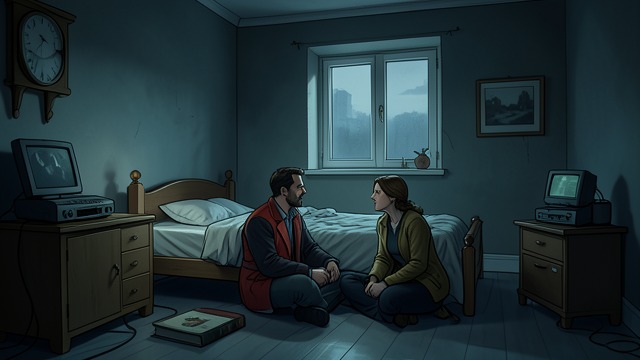
A Temporary Room
Arrival
Dean Moriarty and Marylou begin their New York life in a cold-water apartment, already moving between work, conflict, and uncertain plans.
Pattern
A home appears as a short stop rather than a stable foundation.
The Father on Larimer Street
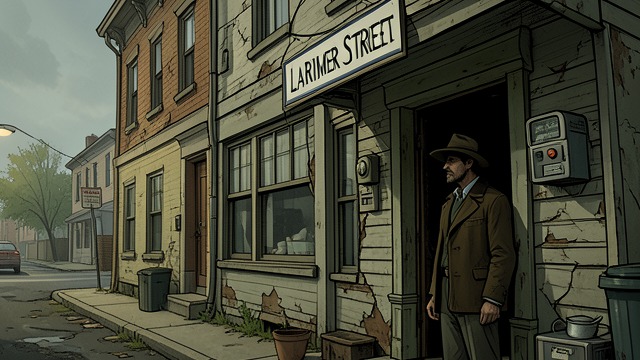
A Home Left Behind
Memory
Dean Moriarty’s childhood on Larimer Street is shaped by a missing mother and an alcoholic father, Old Dean Moriarty. The family home remains a source of longing and shame.
Search
Dean’s later travel repeatedly carries the hope of finding the father who never stays found.
The Migrant Tent
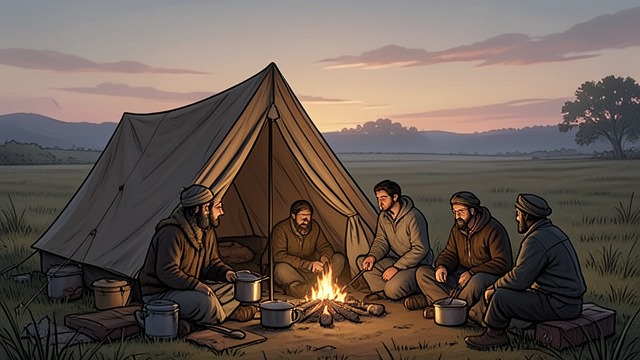
Shelter by the Fields
Temporary Home
Sal Paradise, Terry, and Johnny live in a tent among cotton-picking families. Their daily routine briefly creates belonging despite its poverty.
Fragility
Cold weather and low wages show how quickly a shelter can cease to be livable.
The New York Rooms
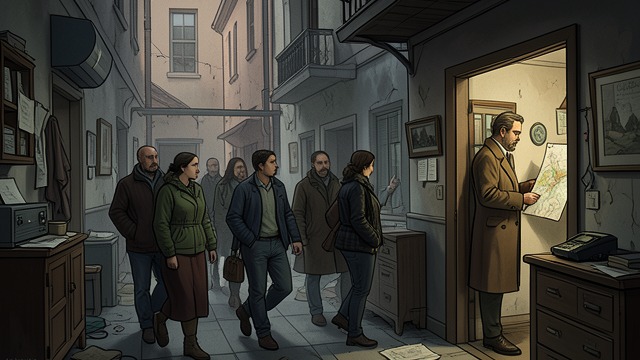
Beds Along the Route
Temporary Shelter
Dean Moriarty and his companions move among apartments, party rooms, and Sal Paradise’s family home. Each place offers a pause but rarely a settled household.
Displacement
Their mobility often depends on hosts who eventually impose limits.
The Unfinished Homecoming

Belonging Without Arrival
Reflection
Sal Paradise looks west from New Jersey and thinks of Dean Moriarty, whose life remains divided among homes, wives, and roads.
Resolution
The novel offers no final homecoming, only the continuing search for a place that can hold a restless life.
Dean’s first New York arrival
During Sal’s 1947 Denver visit
October 1947, in the San Joaquin Valley
During the 1948–1949 New York visits
At the end of the novel
